

The Shanahan–McVay Coaching Tree
This is the most-copied offense in football right now — the "wide zone" family. If a new coordinator runs outside-zone runs, tons of play-action, and pre-snap motion, odds are he comes from this tree. Like the Andy Reid Coaching Tree, it grows out of the The West Coast Offense, but it adds a running game all its own.
Where it comes from
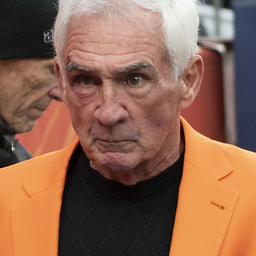
The originator is Mike Shanahan. His scheme is a merger of two older ideas. First, the West Coast passing game — Shanahan was the 49ers' offensive coordinator in the early 1990s under George Seifert, soaking up Bill Walsh's timing-based passing. Second, the outside-zone running game associated with line coach Alex Gibbs. He put them together in Denver (1995–2008), where the zone-blocking run game powered back-to-back Super Bowls and famously turned late-round and undrafted running backs into 1,000-yard rushers.
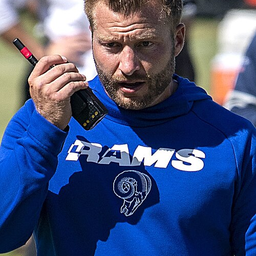
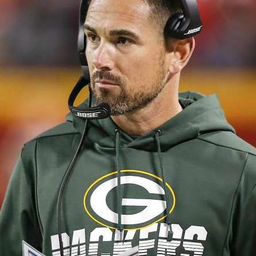
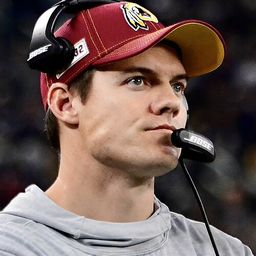
The modern version was born on Mike Shanahan's Washington staff from 2010–2013, which is one of the most loaded coaching rooms in history: his son Kyle Shanahan as coordinator, Sean McVay coaching tight ends, Matt LaFleur coaching quarterbacks, and Mike McDaniel in the building. Kyle and McVay each took the base and modernized it — adding heavy motion, condensed formations, and a flood of play-action. They both became head coaches in the same 2017 hiring cycle (49ers and Rams), and the league has been copying them ever since.
What this offense looks like
- Outside/wide zone running — linemen take lateral zone steps, the back presses the edge and cuts back off the defense's flow. "One cut and go." It rewards athletic, mobile linemen over maulers.
- Play-action off the run — the run and pass look identical at the snap, so defenders who respect the run get punished.
- Pre-snap motion — jet, orbit, and late motion to stress the defense and shift the run strength at the last second.
- Bootlegs — the quarterback rolls away from the run fake with a simple half-field read and clean throwing lanes.
- Condensed formations and multiple tight ends — the Rams have leaned heavily into two- and three-tight-end sets.
- The "illusion of complexity" — a fairly small menu of core plays run from dozens of looks, so each one is different to the defense. It's hard to copy because it depends on precise timing and coaching detail.
What it means for fantasy
The running back story is the big one.
- "Any back can eat." The scheme is so back-friendly that it elevates cheap, late-round backs to startable production. That's the appeal.
- Committee risk is the catch — especially under Kyle Shanahan, the backfield is often a frustrating week-to-week split. The value is real; the hard part is guessing who gets the carries.
- A clear bell-cow in this system is a league-winner (think Christian McCaffrey under Kyle), so when one back separates from the pack, he's gold. Handcuffs matter more here than anywhere — the next man up produces immediately.
- Play-action lifts the passing game. Wide receivers show the strongest efficiency boost — clean separation off motion and play fakes means schemed-open looks. Tight ends benefit too, especially on the multi-tight-end teams (George Kittle is the model).
The lineage
The core members and where they are in 2026:
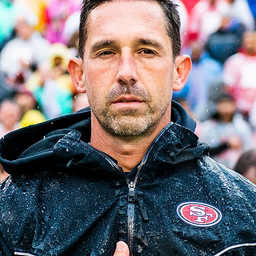
- Kyle Shanahan — San Francisco 49ers head coach. The purest, most run-and-play-action branch.
- Sean McVay — Los Angeles Rams head coach. Leans into condensed sets, motion, and heavy multi-tight-end personnel.
- Matt LaFleur — Green Bay Packers head coach; bridges both branches (worked under Mike Shanahan and McVay).
- Kevin O'Connell — Minnesota Vikings head coach; McVay's coordinator on the Super Bowl LVI team, known for quarterback development.
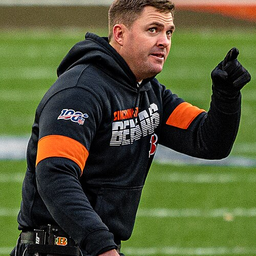
- Zac Taylor — Cincinnati Bengals head coach; McVay branch.
- Liam Coen — Jacksonville Jaguars head coach; the sixth McVay assistant to become a head coach.
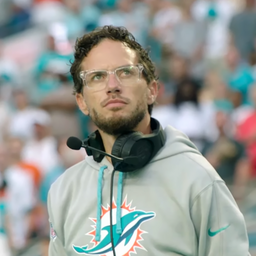
- Mike McDaniel — long a Kyle Shanahan assistant; was head coach in Miami, now offensive coordinator with the Chargers.
- Mike LaFleur — Matt's brother, an assistant under both Kyle and McVay; hired as the Arizona Cardinals' head coach in 2026.
Two notes on membership:
- Raheem Morris rose through McVay's staff but as a defensive coach (his Rams defense won Super Bowl LVI). He counts, with an asterisk — he's a defensive member of an offensive tree.
- Ben Johnson (Bears head coach) is influenced by this tree and often called "the next McVay," but he didn't actually come up under Shanahan or McVay. Influenced-by, not descended-from.
Where the tree is today (2026)
- Kyle Shanahan — San Francisco 49ers Head Coach
- Sean McVay — Los Angeles Rams Head Coach
- Matt LaFleur — Green Bay Packers Head Coach
- Kevin O'Connell — Minnesota Vikings Head Coach
- Liam Coen — Jacksonville Jaguars Head Coach
- Mike LaFleur — Arizona Cardinals head coach
Related: Coaching Trees · The West Coast Offense · Andy Reid Coaching Tree · Defensive Coaching Trees